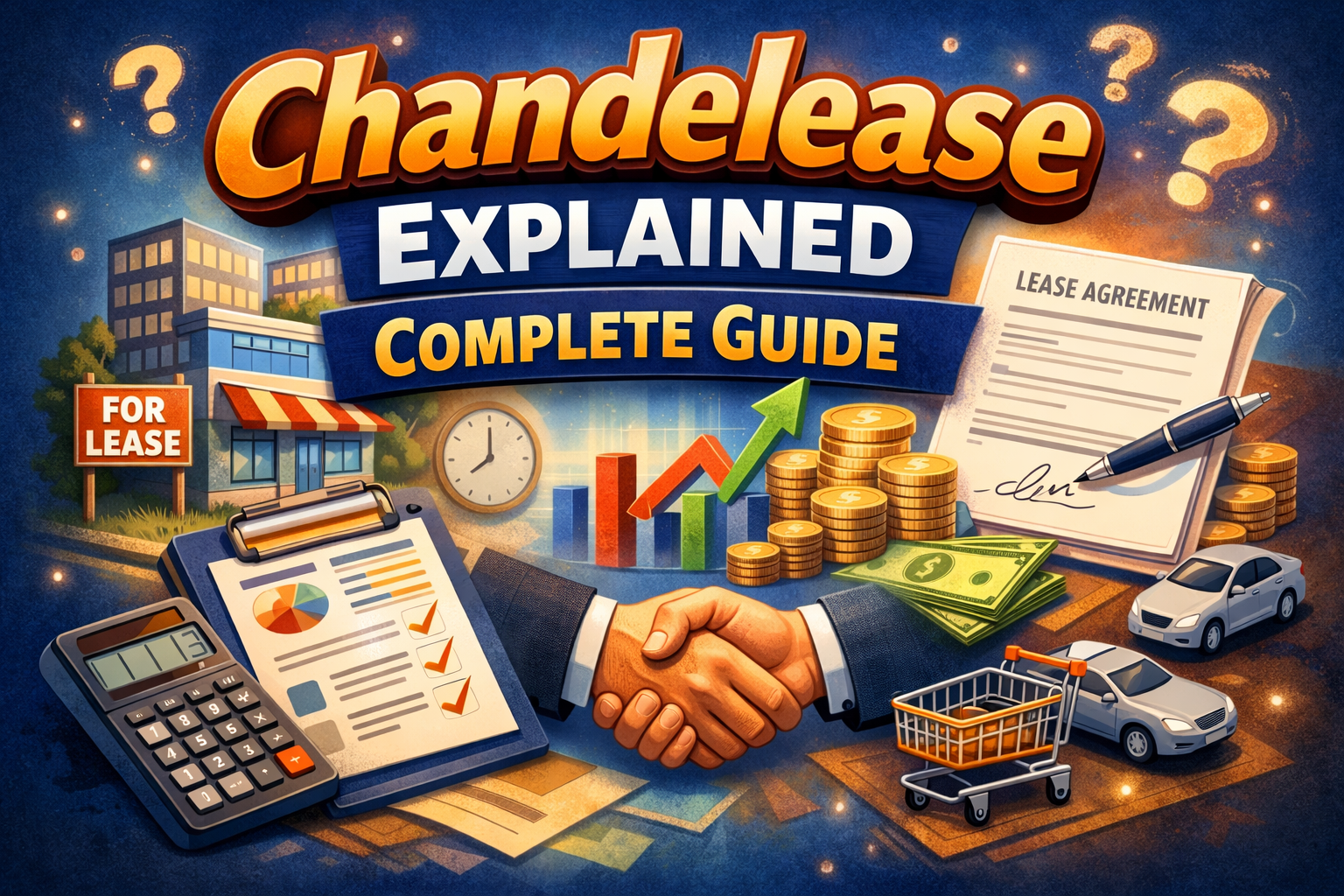
Chandelease Explained! It provides an affordable solution to individuals and businesses who don’t want to make a large capital investment into equipment, vehicles or workspace. Many found owning an asset and tying up capital with ownership to be less attractive than flexible payment models. Chandelease is a term that is starting to creep into conversations around contemporary leasing systems.
In this tutorial will learn what Chandelease is, how it works and the benefits which it provides for people having interest in existing leasing mechanics or flexible asset financing.
What Is Chandelease?
Chandelease is a modern approach to leasing, in which users are able to use precious assets by making structured payments instead of purchasing them outright. It is about convenience, flexibility and digital management.
In other words, you borrow an asset from someone else when it is needed and pay for it over a period of time rather than paying a huge price in one payment.
Some assets that might be covered under a Chandelease agreement include:
- Business equipment
- Office computers and technology
- Commercial vehicles
- Industrial machinery
Property or workspace solutions
Unlike traditional leasing, which involved tons of paperwork and is typically fixed in terms and conditions, Chandelease generally provides flexible contract deadlines and easier management through online systems.
The primary objective is to ease some of the financial burden and still enable access to critical resources.
How Does Chandelease Work?
While details will differ by provider, the overarching process is underlined by most Chandelease agreements.
1. Choosing the Asset
Let’s go through the steps one at a time, starting with Step 1. Instead of purchasing it, they enter into a Chandelease agreement. Accordingly, this eliminates the barrier of high upfront cost.
As an example, a startup that requires 10 laptops for employees, may not want to invest a large amount upfront. By leasing, they can get operations going and pay monthly.
2. Flexible Contract Terms
Customization is a centrally defining feature of Chandelease. The deal can frequently be structured around:
- Length of Lease (short- or long-term)
- Monthly or quarterly payments
- Maintenance responsibility
- Upgrade options
This flexibility allows businesses to relate expenses directly to revenues.
3. Digital Management
And today’s most modern leasing systems are hosted online. Users can:
- Check payment schedules
- View invoices
- Track contract dates
- Request changes
- It simplifies management and reduces paperwork.
4. End-of-Lease Options
At the end of the lease term, users generally have three options:
- Renew the contract
- Upgrade to newer equipment
- Return the asset
- Purchase it (if allowed)
This is one such reason as to why many businesses would rather lease instead of owning outright.
Benefits of Chandelease
1. Better Cash Flow
Payments can be done over time, rather than just upfront in a big sum. This enables businesses to free up cash for marketing, salaries or growing.
2. Lower Risk of Depreciation
Things like cars or technology depreciate have an expiration date. In Chandelease, the provider mostly continues to be the owner which prevents loss as a result of depreciation for the user.
3. Easy Upgrades
Technology changes quickly. Leasing enables users to transfer into newer equipment with the hassle of asset liquidation.
4. Simple Administration
Digital contracts and automated billing cut down on paper and time-consuming tasks. All of this is usually controllable from one dashboard.
5. Predictable Budgeting
Determine the fixed number of payments your business needs to plan for; It is less surprising than ownership.
Who Can Benefit from Chandelease?
Startups
Small capital is the typical trait of new businesses. Leasing provides them the way to operate professionally without a big investment.
Small and Medium Businesses
They have better financial management and no risk of ownership.
Growing Companies
Companies starting new projects might require short-term equipment. Leasing provides flexibility.
Individuals
Others may be able to lease cars or heavy equipment.
Chandelease vs Traditional Leasing
Locking into fixed contracts with little flexibility is a common trend in traditional leasing. Making adjustments can be tough and the paperwork may take a long time.
Chandelease improves this by offering:
- Custom agreements
- Digital tracking systems
- Upgrade options
- Transparent payment structure
As such, it is appropriate for the modern day business environment where requirements evolve rapidly.
You should this before you sing
Examine the contract before signing any agreement. Pay attention to:
- Total cost over the lease term
- Early termination penalties
- Maintenance responsibilities
- Insurance requirements
- Extra service fees
By knowing what these terms mean you can avoid future financial problems.
Frequently Asked Questions (FAQs)
Q1. Is Chandelease better than buying?
A: It depends on your situation. Leasing may be more appropriate than ownership for flexibility and improved cash flow.
Q2. Can I cancel the contract prematurely?
A: Some providers let you break your lease early, though there may be fees to pay.
Q3. Are maintenance services included?
A: Sometimes yes, sometimes no. However, it is always best to check the terms as it depends on the agreement.
Q4. Who owns the asset?
A: Usually the leasing company holds ownership, unless you decide to buy it at the end.
Q5. What happens when the lease is over?
A: Depending on the contract you can renew, upgrade and return or acquire the asset.
Final Thoughts
Chandelease, essentially represents the second generation or modern era of leasing. It provides users with access to critical assets without the substantial upfront costs.
For companies seeking growth and consumers in search of flexible payment options, it can be a viable alternative to ownership. Leasing systems such as Chandelease, then, are likely to be all the rage in due course – In order for people to make their money work harder and better yet.